
The 2nd PAK meeting has emerged as a monumental milestone in Middle Eastern diplomacy. This high-level summit brought together key players including Pakistan, Iran, and America to address regional instability. A primary outcome of these discussions was the formal 2nd PAK ceasefire. This agreement has significantly altered the security trajectory of Iraq. Consequently, the nation is witnessing a period of relative calm that was previously unimaginable.
Iraq has historically served as a central arena for external rivalries. Nevertheless, the recent diplomatic breakthrough has provided the country with much-needed breathing room. Improved border safety and internal stability are now visible across various provinces. This article explores how these strategic changes are fostering a safer environment for citizens and businesses alike.
2nd PAK Meeting and Strategic Regional Shifts
The 2nd PAK meeting focused primarily on de-escalating the long-standing friction between Iran and the US. Pakistan served as a vital mediator, providing a neutral ground for these complex negotiations. By facilitating direct dialogue, the participants managed to draft a roadmap for peace.
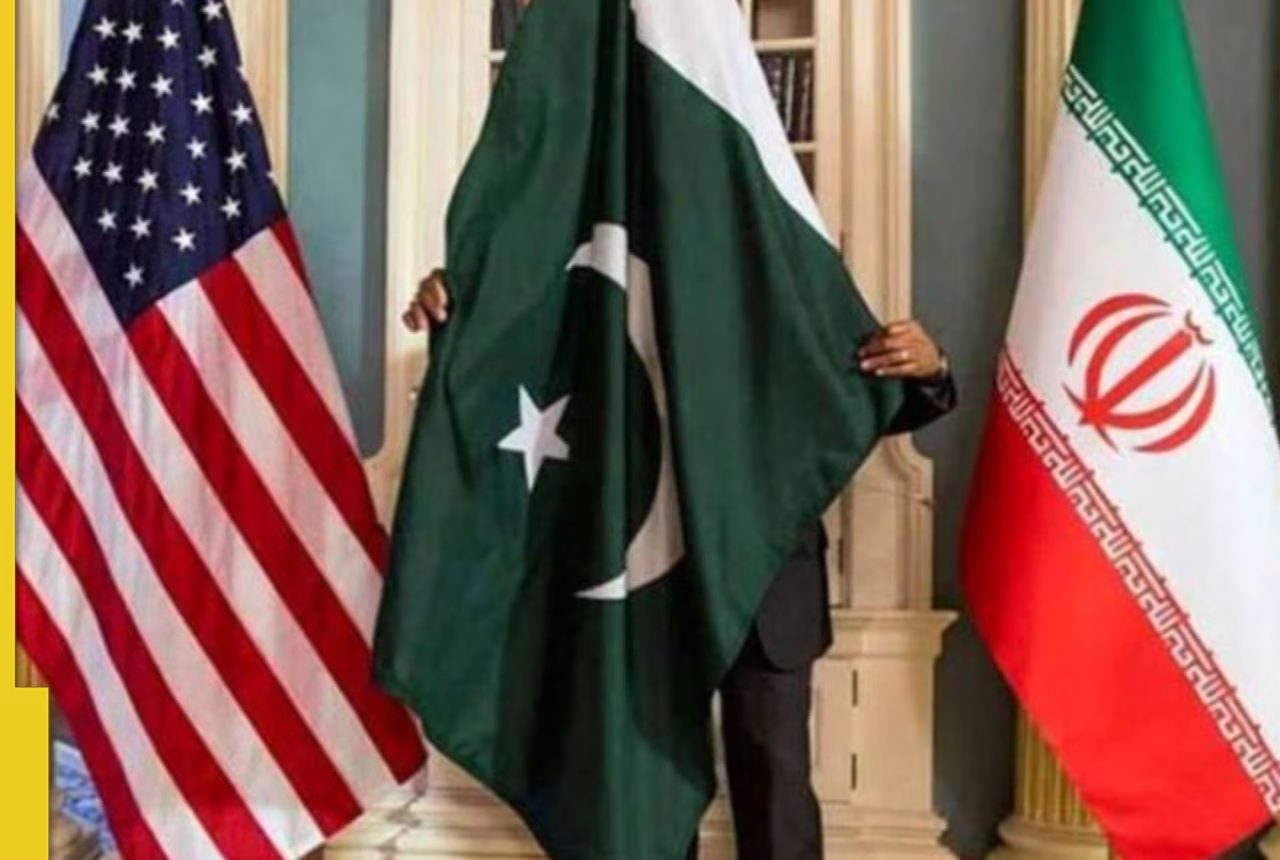
Firstly, the summit established a framework for immediate communication during crises. Secondly, it led to the withdrawal of heavy weaponry from sensitive border zones. Thirdly, it encouraged a policy of non-interference in domestic Iraqi affairs. Because of these efforts, the 2nd PAK ceasefire was implemented with widespread international support. This mechanism has effectively cooled down several flashpoints that often spilled over into Iraqi territory.
Iraq’s Security Challenges Prior to the Agreement
Before the 2nd PAK meeting, Iraq faced a multifaceted security crisis. Armed factions frequently engaged in skirmishes that threatened urban centers. Furthermore, the tension between America and local groups often led to retaliatory strikes. These incidents disrupted daily life and hampered national sovereignty.
Economic progress was also stalled due to the high risk of violence. Investors avoided long-term projects because of the unpredictable nature of regional politics. Therefore, the internal security of Iraq was inextricably linked to the decisions made by foreign powers. The need for a comprehensive regional agreement became an urgent necessity for survival.
Impacts of the 2nd PAK Meeting on Border Control
One of the most immediate benefits of the 2nd PAK meeting was the stabilization of Iraq’s borders. Previously, these areas were conduits for unauthorized movement and smuggling. Now, improved diplomatic relations have led to better patrolling and intelligence sharing.
- Reduced Military Friction: Fewer encounters between foreign forces have been recorded near the frontier.
- Enhanced Surveillance: Technical cooperation between Iran and Iraq has limited illegal crossings.
- Diplomatic Channels: Open lines of communication prevent minor border incidents from escalating into full-scale conflicts.
As a result, the flow of legitimate trade has increased. Safer borders mean that logistical routes are now more reliable for international commerce. This shift has directly contributed to the overall safety of the Iraqi hinterland.
2nd PAK Ceasefire and the Decline in Militancy
The implementation of the 2nd PAK ceasefire has led to a noticeable drop in militant activities. Many groups that previously thrived on regional chaos found their support systems weakening. When external tensions subsided, the motivation for proxy warfare also diminished.
Moreover, the disruption of illicit funding channels has restricted the operational capacity of these groups. With less external interference, the Iraqi government has redirected its focus toward domestic policing. Security forces are now conducting more precise operations against remnant cells. Consequently, urban areas like Baghdad and Basra have seen a significant reduction in bombings and organized crime.
Strengthening Local Governance and Public Trust
The success of the 2nd PAK meeting has boosted public confidence in the state’s ability to protect its people. When citizens feel safe, they are more likely to participate in social and political life. This renewed trust is essential for the long-term reconstruction of the country.
Additionally, the government can now allocate more resources to civil services rather than just defense. Schools, hospitals, and public parks are seeing increased attendance. This sense of normalcy is perhaps the most profound impact of the diplomatic efforts led by Pakistan and its partners.
Economic Prosperity Under the 2nd PAK Ceasefire
Security and the economy are two sides of the same coin. The stability brought by the 2nd PAK ceasefire has opened new doors for the Iraqi private sector. Businesses that were once hesitant are now expanding their operations across the country.
At Marseilia Gifts, we understand the value of a peaceful business environment. We offer a complete range of customized awards, advertising solutions, and premium gift packaging. Our services help companies celebrate achievements and strengthen their brand presence. In a secure Iraq, our display systems and physical branding tools allow businesses to communicate effectively with their clients.
Furthermore, the digital landscape is evolving rapidly alongside physical infrastructure. Companies are seeking advanced technological support to remain competitive. For instance, IT Friend Solution provides essential software services that empower businesses to grow in this new era of stability. Their expertise in digital innovation ensures that Iraqi firms can match international standards.
Reducing Proxy Conflicts through the 2nd PAK Meeting
For decades, Iraq was caught in the middle of proxy wars. The 2nd PAK meeting addressed this issue by encouraging regional powers to exercise restraint. By signing the 2nd PAK ceasefire, the involved nations agreed to limit their indirect confrontations.
This reduction in proxy activity has allowed Iraqi political factions to seek internal compromises. Without the pressure of external masters, local leaders are focusing more on national interests. While political challenges remain, the lack of foreign-fueled violence has made dialogue much more productive. This shift is a direct consequence of the mediation efforts involving Pakistan, America, and Iran.
Protection of National Infrastructure
Iraq’s infrastructure has often been a target during times of unrest. However, the period following the 2nd PAK meeting has seen better protection of vital assets. Oil pipelines, power grids, and water treatment plants are now operating with fewer interruptions.
- Energy Security: Stable oil exports are funding the national budget.
- Transport Networks: Revitalized highways are connecting major cities for trade.
- Communication Systems: Secure networks are allowing for better governance and private enterprise.
Therefore, the protection of these facilities ensures that the basic needs of the population are met. This stability forms the backbone of Iraq’s future growth.
The Role of Pakistan as a Mediator
The diplomatic success of the 2nd PAK meeting highlights the growing influence of Pakistan in regional affairs. By maintaining a balanced relationship with both America and Iran, it provided a unique bridge for communication.
Pakistan’s role was not merely symbolic; it involved technical mediation and the drafting of the 2nd PAK ceasefire terms. This proactive approach helped all parties find common ground. The resulting peace has benefited the entire neighborhood, with Iraq being the primary beneficiary of this de-escalation.
Long-Term Outlook for Iraqi Security
While the 2nd PAK meeting has brought immediate relief, the future requires sustained commitment. Peace is a process, not a single event. Iraq must continue to strengthen its internal institutions to prevent a vacuum of power.
Firstly, the professionalization of the army must continue. Secondly, economic diversification is needed to reduce dependence on oil. Thirdly, regional cooperation should be institutionalized through regular summits. If the spirit of the 2nd PAK ceasefire is maintained, Iraq could become a hub for trade and culture once again.
Challenges on the Horizon
Despite the positive trends, certain obstacles still linger. Small factions may attempt to sabotage the 2nd PAK ceasefire to regain lost influence. Additionally, global economic fluctuations can impact Iraq’s recovery efforts.
It is also important to recognize that political stability is a gradual journey. The government must ensure that the benefits of peace reach all segments of society. Continued support from the international community, including US and regional neighbors, remains vital.
Conclusion
The 2nd PAK meeting has fundamentally reshaped the security environment in Iraq. Through the successful implementation of the 2nd PAK ceasefire, the nation has moved away from the brink of constant conflict. The mediation by Pakistan and the cooperation of Iran and America have proven that diplomacy can triumph over discord.
As security improves, the focus is shifting toward growth and branding. At Marseilia Gifts, we are proud to support this journey by providing high-quality advertising solutions and customized awards. We believe that celebrating achievements is vital for a thriving society. Moreover, with the digital expertise of partners like IT Friend Solution, the future of Iraqi business looks brighter than ever. Stability, innovation, and peace are finally paving the way for a stronger Iraq.